Unlocking Vehicle Stability: The Importance of Alignments in Fort Collins
Ensuring your vehicle's optimal performance and tire longevity requires more than just routine maintenance – it involves understanding and maintaining proper alignment. In Fort Collins, where road conditions can vary, alignment plays a crucial role in vehicle driveability, stability, and tire wear.
What happens during an alignment and why is it important?
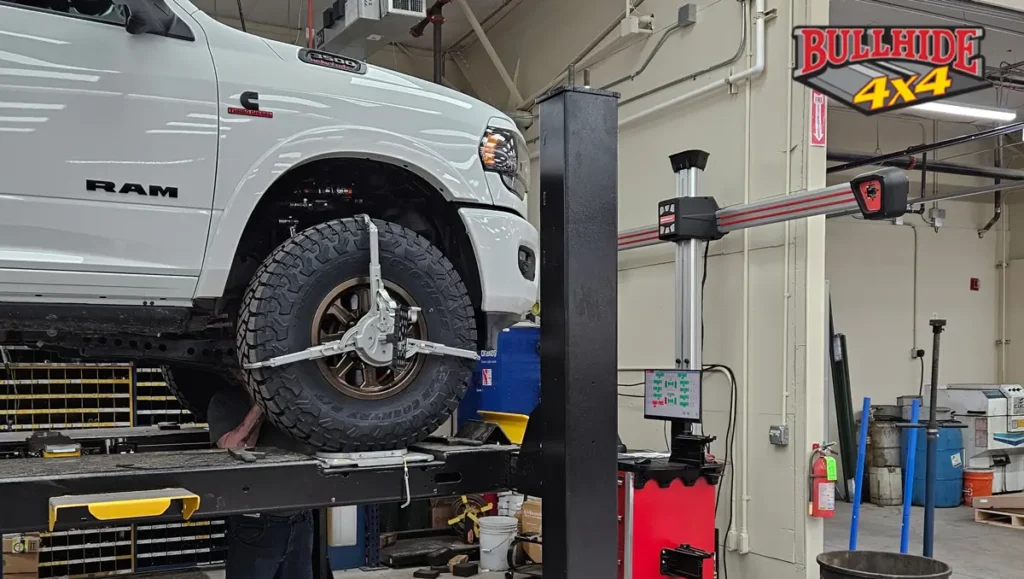
Alignment involves checking steering and suspension angles, ensuring the front wheels align with the rear wheels. The key angles adjusted are Caster, Camber, Toe, and Thrust. To better understand these angles, let’s use an arm and our feet. For Caster and Camber, hold your arm in front of you at a right angle. Your elbow should be pointed toward the ground and your fist should be pointed toward the sky. Using this scenario, your fist represents the upper ball joint, and your elbow the lower ball joint.
Camber: With your fist directly above your elbow this represents 0 degrees or Neutral Camber. With your other hand grab your fist and pull it towards the other side of your body without moving your elbow. Your arm should now be tilted toward the center of your body representing Negative Camber. Pushing your fist in the opposite direction would represent Positive Camber. Too much negative camber will wear the inside edge of your tires and too much positive camber will wear the outside edge of your tires.
Caster: With your fist directly above your elbow this would represent 0 degrees or Neutral Caster. Without moving your elbow, tilting your fist back towards your body (like you’re winding up to throw an axe) would represent Negative Caster, and tilting your fist away from your shoulder (like you’re releasing the axe) would represent positive Caster. This is not a tire-wearing angle.
Toe: Stand with your feet together and look down at your toes. Keeping your heels together and pointing your toes away from each other represents “Toe Out” whereas keeping your toes together and pointing your heels away from each other represents “Toe In”. In this scenario, your feet are representing your tires. Too much “Toe In” or “Toe Out” will create a feathered wear pattern on the edge of the tires.
Thrust Angle: Standing with your feet apart pretend that there is a physical attachment connecting your feet. If they are squared up with each other and facing forward, congratulations, your thrust angle is 0! Now remembering that you are pretending there is a physical attachment between your feet, drop one foot slightly back and angle your toes towards the side that you dropped your foot back on. This is a bad thrust angle and can result in vehicle “crab walking”.
What type of alignments can your equipment handle?
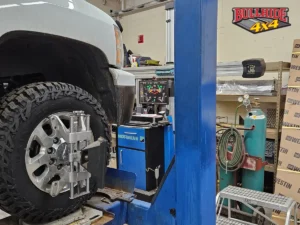
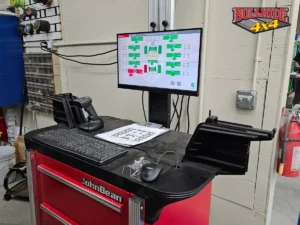
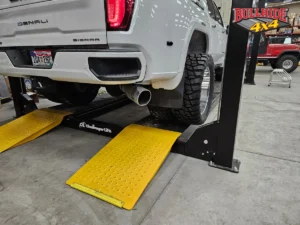
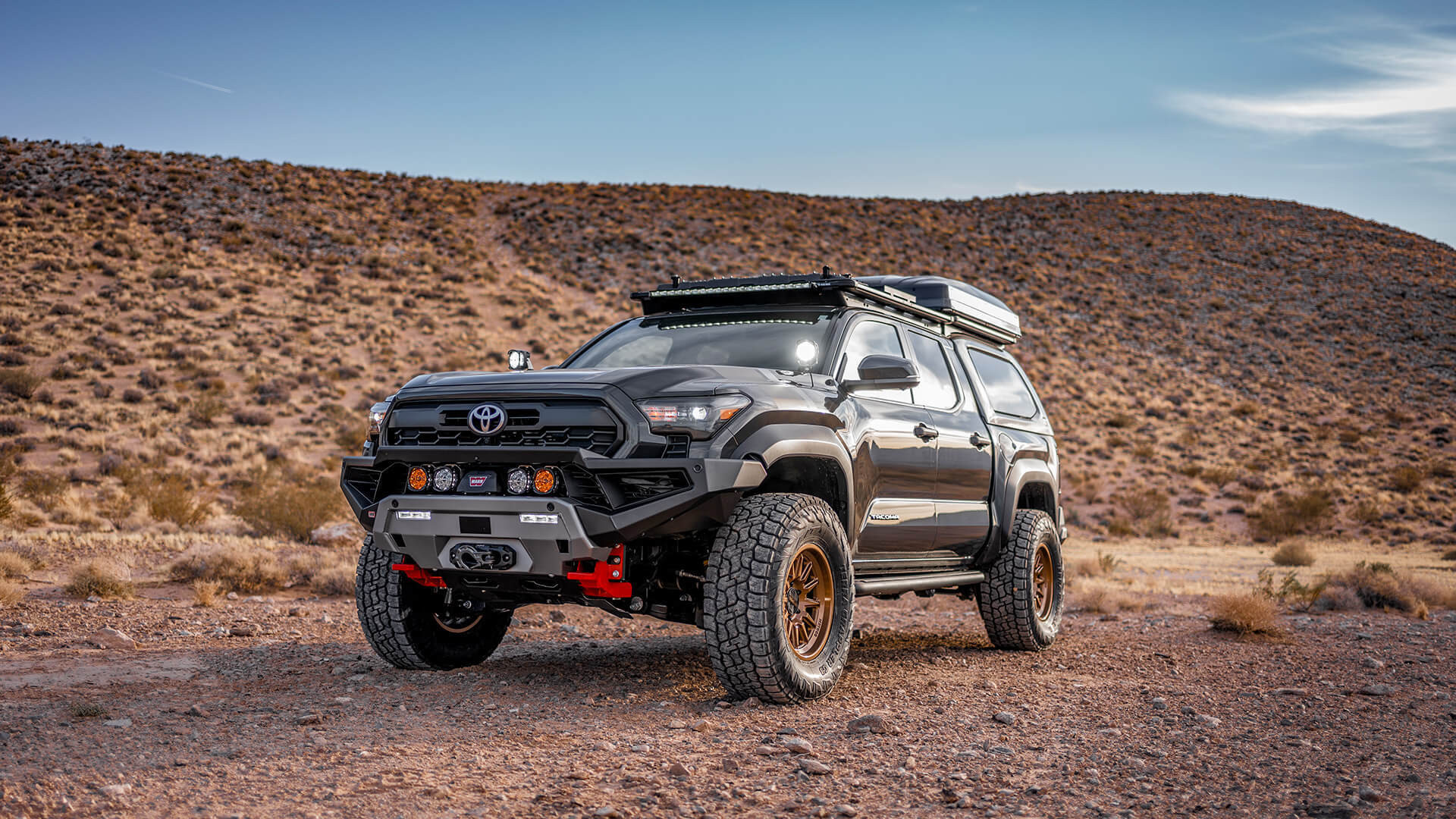
Our equipment at Bullhide 4x4 is versatile, capable of aligning most passenger cars and trucks, including lifted, lowered, stock, and custom builds with adjustable suspension setups.
How often should a vehicle get an alignment? Is it different for various types of vehicles?
Alignments are recommended when replacing tires to protect your investment. If you encounter a significant impact like hitting a curb or pothole, have the alignment inspected. Offroad enthusiasts should inspect alignments more frequently, possibly after each trip.


How does a lift on a vehicle affect the alignment?
In solid front axle vehicles, lift kits impact drag link, track bar, and caster angles. Poor alignment can lead to stability issues and the notorious "death wobble." For IFS vehicles, lift kits affect tie rod and control arm angles, impacting Camber and Toe. Adjustable components like upper control arms are crucial for fine-tuning alignments.
Is an alignment required every time the tires are rotated?
Tire rotations themselves don't demand an alignment. However, if frequent rotations occur due to uneven wear, an alignment inspection is advisable.
How often should tires be rotated?
For optimal tire wear, aim for rotations every 5000-6000 miles, aligning with oil change intervals. If your oil change schedule extends to 5000-7500 miles, rotate your tires at every oil change.
What type of alignments can your equipment handle?
Our equipment at Bullhide 4x4 is versatile, capable of aligning most passenger cars and trucks, including lifted, lowered, stock, and custom builds with adjustable suspension setups.
How often should a vehicle get an alignment? Is it different for various types of vehicles?
Alignments are recommended when replacing tires to protect your investment. If you encounter a significant impact like hitting a curb or pothole, have the alignment inspected. Offroad enthusiasts should inspect alignments more frequently, possibly after each trip.
How does a lift on a vehicle affect the alignment?
In solid front axle vehicles, lift kits impact drag link, track bar, and caster angles. Poor alignment can lead to stability issues and the notorious "death wobble." For IFS vehicles, lift kits affect tie rod and control arm angles, impacting Camber and Toe. Adjustable components like upper control arms are crucial for fine-tuning alignments.
Is an alignment required every time the tires are rotated?
Tire rotations themselves don't demand an alignment. However, if frequent rotations occur due to uneven wear, an alignment inspection is advisable.
How often should tires be rotated?
For optimal tire wear, aim for rotations every 5000-6000 miles, aligning with oil change intervals. If your oil change schedule extends to 5000-7500 miles, rotate your tires at every oil change.
GET AN ALIGNMENT QUOTE TODAY
📞 Call us at (970) 224-2288
📍 Visit us at 216 West Horsetooth Road, Fort Collins, CO 80525
📩 Or Contact Us Online
Learn More From The Experts At Bullhide 4x4
Winch Safety Guidelines
Spring is around the corner and many can’t wait to get back on the trails. We want you to have a good time, but also be safe! Inevitably, you or someone you come across may get stuck and need to be winched out or over an obstacle. Before heading out, it’s very important you know...Continue reading→
4 Tips for Off-Roading Responsibly
As the weather warms up, more and more people are heading outdoors. Off-roading is a popular hobby for many, and it’s one that can be enjoyed responsibly. If we want to ensure that our favorite off-roading areas stay pristine and enjoyable for others, then we need to follow these tips from the Tread Lightly organization!...Continue reading→
Car Camping Accessories at Bullhide 4×4
Camping season is here! With so much open space and mountains to explore, Coloradans are grabbing their camping accessories and packing up their vehicles for a weekend trip filled with adventure and sleeping under the stars. Good thing! Bullhide 4×4 is here to help you get your vehicle camping ready. Besides backpacks, ground tents, and...Continue reading→